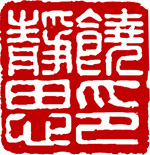
David Hall received permission to teach Jikishinkage-ryū from its 18th head, Namiki Yasushi, when he left Japan to attend his doctoral program at UC Berkeley. He did so first in California when in graduate school and later in Maryland, at his dōjō the Hōbyōkan.1
Namiki Yasushi died in 1999 and his successor, Itō Masayuki, who was also one of David Hall’s teachers, along with the late Kato-sensei, died shortly thereafter in 2001. After 2001 the dojo split, with Yoshida Himeji continuing in the same location and Namiki’s two adult sons leaving to found the Jikishinkage-ryū Kuunki.
Namiki Kazuya continued to teach independently of Yoshida, and was still a member of the kobudō community, demonstrating Heki-ryū archery at enbu, which was an art practiced by his father in the same line as Kawashima Takashi, 16th headmaster of Jikishinkage-ryū Seito-ha. His Jikishinkage-ryū school still exists.
There are multiple lines of practice stemming from Namiki Yasushi’s teaching. The Hōbyōkan is one of them and has always been careful to say it is a private dōjō and not the official representatives of the art. Senior members have maintained positive relationships with related lines of practice. One has enteried into practice with the Naganuma-ha, receiving formal certification.2
End Notes
-
David Hall held a jomokuroku associated to his Jikishinkage-ryū practice. This is not a certificate of mastery in the art (e.g., menkyo-kaiden). This is why the Hōbyōkan is not an official line of practice of Jikishinkage-ryū and does not issue traditional ranks in the art. ↩
-
Similarly, upon the death of Iwasa Masaru, the Hyakurenkai split. Sotaru Wakabayashi (若林 悟) now leads the faction recognized by the Nihon Kobudō Shinkokai, while others including the Yoshida faction, train independently of him. ↩